KITCHEN WORKFLOW TECHNOLOGY FOR RESTAURANTS
Make important kitchen work easier to see, easier to follow, and easier for managers to reinforce across shifts.
Digital job aids · Portion control · Food labels · Checklists · Training
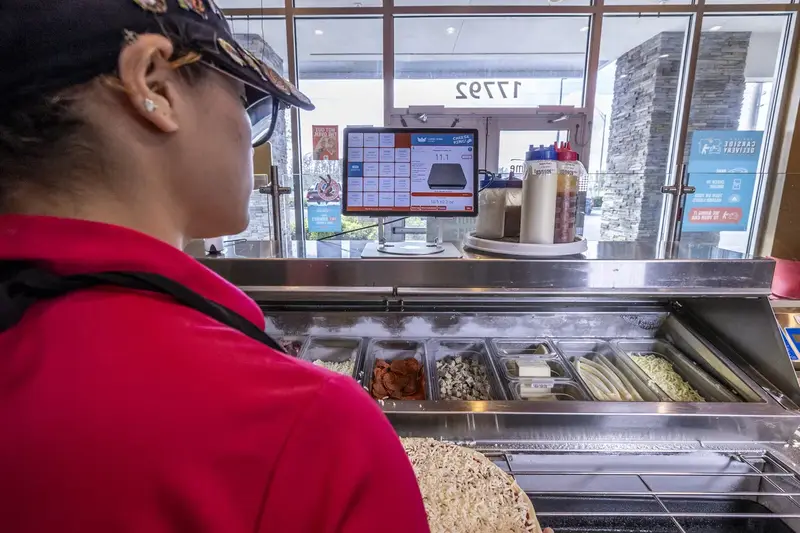
Connect station guidance, preparation, portioning, and labeling to the way the kitchen actually works.
GUIDE
Give employees clearer station instructions, recipe guidance, and job aids that are easy to reference during service.
EXECUTE
Connect preparation, portioning, labeling, and handoff steps into a process that follows the way the kitchen works.
REVIEW
Use checklists, training, and manager follow-up to reinforce important procedures across shifts and locations.
WHAT IS KITCHEN WORKFLOW TECHNOLOGY?
Kitchen workflow technology is the combination of software, digital job aids, checklists, displays, and operating procedures used to guide work in a commercial kitchen. The exact setup can vary by restaurant. Some teams may need clearer station instructions, while others may need stronger support for portioning, labeling, training, or manager review.
A kitchen workflow system may help employees understand what task needs to happen next, which station or employee is responsible, how a preparation step should be completed, what portion or labeling standard applies, and when a manager should review an exception or incomplete task.
Before choosing a solution, operators should confirm which functions are included and how the technology fits the restaurant's existing equipment, staffing, menu, and procedures.
GIVE EVERY STATION A CLEARER PROCESS
Restaurant work often crosses several stations before a product or order is complete. Ingredients may be portioned, prepared, assembled, checked, packaged, labeled, and handed off. When the process is mostly verbal or depends on memory, small variations can appear quickly during a busy shift.
Kitchen workflow technology can help organize work around repeatable steps such as:
- Ingredient preparation
- Recipe and portion guidance
- Assembly and finishing
- Expo and handoff
- Food labeling and product identification
- Quality and safety checks
- Opening, closing, and cleaning procedures
The right process should be simple enough for employees to use during service. Technology works best when it supports the station instead of forcing team members to manage unnecessary screens, steps, or duplicate paperwork.
USE DIGITAL JOB AIDS TO REDUCE VARIATION
Employees should not have to rely entirely on memory or informal coaching to repeat important preparation steps. Digital job aids can provide a common reference for selected procedures, especially when a restaurant is training new team members or maintaining shared standards across locations.
- Give new employees clearer preparation guidance
- Reinforce standard recipes and portion expectations
- Make labeling steps easier to repeat
- Reduce reliance on verbal reminders
- Create more consistent handoff procedures
- Give managers a clearer way to identify where a process needs attention
Digital guidance does not replace training, food-safety judgment, or manager oversight. It gives the team a more consistent process to follow and makes expectations easier to explain and reinforce.
CONNECT WORKFLOW WITH LABELS, PORTIONS, AND CHECKS
Kitchen workflow is connected to more than order status. A restaurant also needs consistent portioning, accurate food labeling, temperature procedures, checklists, and employee training. When those activities are treated as separate tasks, employees may switch between disconnected instructions or paper records during the same shift.
Label King Turbo's documented restaurant operations focus includes food labels, temperature monitoring, portion control, checklists, training, and kitchen operations. These functions can support a more complete operating model around preparation and service.
- Food labels help identify prepared items and support rotation procedures
- Portion control supports consistent serving sizes and recipe execution
- Temperature monitoring supports review of temperature-controlled equipment
- Checklists help structure recurring operational tasks
- Training tools help employees learn repeatable procedures
The specific setup should be configured around the restaurant's menu, equipment, staffing, and food-safety requirements. Confirm detailed hardware, integration, alerting, or reporting capabilities before purchase.
SUPPORT TRAINING ACROSS SHIFTS AND LOCATIONS
A workflow that works only when one experienced employee is present is difficult to scale. Restaurants need procedures that can be explained to new hires, followed by different shifts, and adapted to more than one location when the operation grows.
Kitchen workflow technology may help managers build shared standards for selected tasks while still allowing each location to account for its equipment and menu. It can give leaders a clearer starting point for training, coaching, and reviewing whether important steps are completed consistently.
For multi-location operators, the most useful platform is not necessarily the one with the most features. It is the one that fits the actual operation and makes shared procedures practical for employees to use every day.
WHEN SHOULD A RESTAURANT CONSIDER KITCHEN WORKFLOW TECHNOLOGY?
Kitchen workflow technology may be worth considering when your restaurant:
- Relies heavily on paper tickets, verbal instructions, or informal coaching
- Has multiple kitchen stations or preparation steps
- Wants more consistent portions, labels, or recipe execution
- Needs clearer procedures for opening, closing, or recurring checks
- Is training new employees across different shifts
- Operates more than one location with shared standards
- Wants food labeling, temperature procedures, checklists, and training to fit one operating model
Not every restaurant needs the same technology. The right choice depends on the work that needs to be standardized, the tools already in place, and how employees will interact with the workflow during service.
KITCHEN WORKFLOW TECHNOLOGY AND A KITCHEN DISPLAY SYSTEM
A kitchen display system can show orders or tasks on a screen, while kitchen workflow technology describes the broader process used to guide, execute, and review the work. A display may be one part of the workflow, but it does not automatically define recipes, portion standards, labeling procedures, training, or manager checklists.
Restaurants should evaluate how a proposed system supports the complete process from preparation through completion. Confirm whether the solution is intended to manage order information, guide station procedures, support operational checks, or combine several of those functions.
BUILD A CONNECTED KITCHEN WORKFLOW
See how food labeling, temperature monitoring, portion control, checklists, training, and kitchen operations fit together in one platform.
Explore Restaurant Operations SoftwareFREQUENTLY ASKED QUESTIONS
What is kitchen workflow technology?
Kitchen workflow technology is the combination of digital tools, job aids, checklists, displays, and procedures used to guide and standardize work in a commercial kitchen.
Can kitchen workflow technology help with employee training?
Yes. Digital job aids, defined procedures, portion guidance, and checklists can give employees a common reference point during onboarding and daily work.
Does kitchen workflow technology replace a kitchen display system?
Not necessarily. A kitchen display may be one component of a broader workflow. Restaurants should confirm whether a proposed solution supports order display, station guidance, checklists, training, or other operational functions.
Can Label King Turbo support kitchen workflows?
Label King Turbo is documented as a restaurant operations platform covering food labeling, temperature monitoring, portion control, checklists, training, and kitchen operations. The exact workflow, hardware, integration, and reporting capabilities should be confirmed with a specialist.
Can kitchen workflow technology help multiple locations?
It can help when the system supports shared procedures, training, job aids, and operational standards. The right setup depends on the restaurant group's locations, equipment, menu, and management process.
BUILD A MORE CONSISTENT KITCHEN WORKFLOW
Make important work easier for employees to understand and easier for managers to reinforce.