THE COMPLETE RESTAURANT AUDIT CHECKLIST
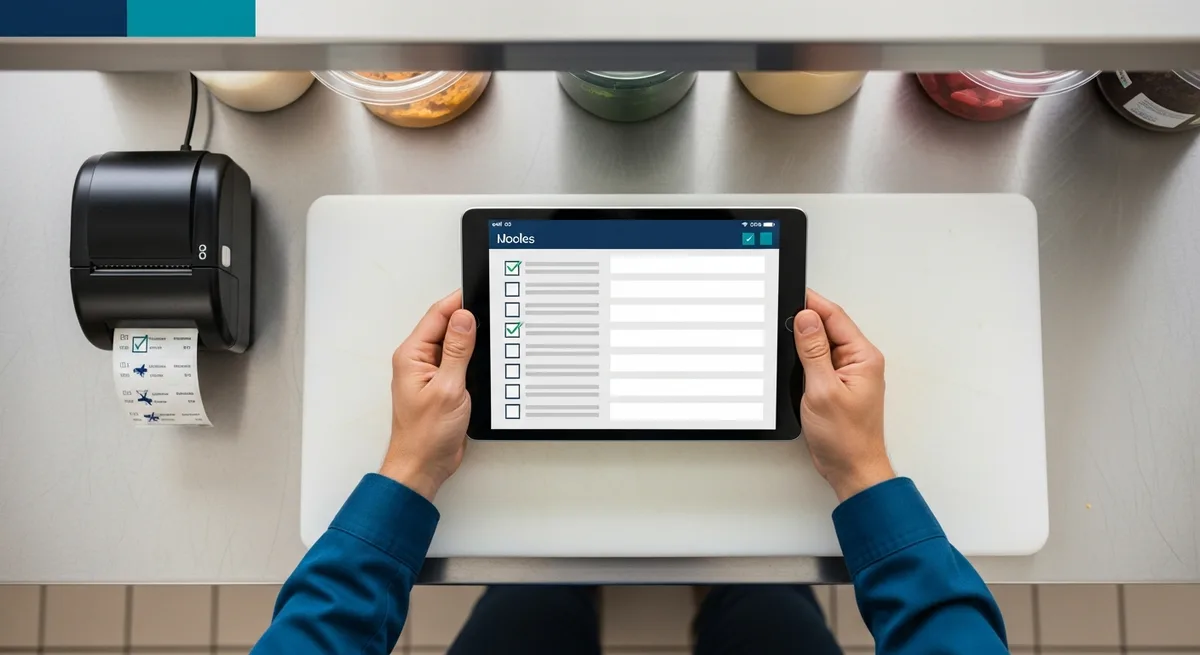
Restaurant audits come in many forms — corporate brand inspections, health department visits, internal franchise reviews, and third-party food safety assessments. They all check roughly the same categories. This complete checklist covers everything an auditor will look at, organized so your team can self-audit weekly and never be caught off guard. Use it as-is or adapt it for your concept.
How to Use This Checklist
The most effective approach is a weekly self-audit performed by a manager who didn’t work the previous shift — a fresh set of eyes catches issues that the regular team has grown used to seeing. Score each item Pass, Fail, or N/A, and document any failures with a photo and a corrective action.
Section 1: Food Safety
- All cooler temperatures between 33°F and 41°F, documented in temperature logs.
- All freezer temperatures at 0°F or below, documented.
- Hot holding equipment maintaining 135°F or above.
- Cold holding (sandwich tables, salad bars) maintaining 41°F or below.
- All prepared food labeled with prep date and use-by date.
- No expired product in storage.
- Raw proteins stored below ready-to-eat items in coolers.
- Thermometers calibrated within the past 7 days — see our calibration guide.
- Sanitizer concentration tested at every station (quat 200–400 ppm, chlorine 50–100 ppm).
- Cooling logs documented for any product cooled in-house.
- FIFO (first-in, first-out) rotation visible in all storage.
- No bare-hand contact with ready-to-eat foods.
Section 2: Cleanliness and Sanitation
- All food contact surfaces visibly clean and sanitized.
- Floors, walls, and ceilings clean and in good repair.
- Hand sinks stocked with soap, paper towels, and warm water.
- Three-compartment sink properly set up: wash, rinse, sanitize.
- Dishwasher temperature gauges reading correctly (final rinse 180°F+).
- Trash bins covered and not overflowing.
- Bathrooms clean, stocked, and accessible.
- Drains clear and not pooling.
- No evidence of pests (droppings, gnaw marks, live insects).
- Mop and broom storage proper and away from food prep.
Section 3: Equipment and Facilities
- All cooking equipment functioning and free of grease buildup.
- Hood vents clean with current cleaning records on file.
- Fire suppression system inspected within the last 6 months.
- Fire extinguishers tagged and within service date.
- First aid kit fully stocked.
- Exit signs lit and emergency lighting functional.
- All refrigeration gaskets intact and clean.
- Ice machine clean with no visible mold or scale.
- Grease trap serviced within scheduled interval.
- HVAC functioning — dining room temperature comfortable.
Section 4: Staff and Training
- All employees wearing clean uniforms, hair restraints, and proper footwear.
- Food handler certifications current and on file.
- Manager food safety certification (ServSafe or equivalent) current.
- Employee illness policy posted and acknowledged.
- Hand-washing observed every 30 minutes during service.
- No eating, drinking, or phone use in food prep areas.
- Training records up to date for all new hires past their 90-day mark.
- Allergen training documented for all line staff.
Section 5: Labeling and Documentation
- All prepped items have a printed label with name, prep date, and discard date — no handwritten labels.
- Allergen information visible on all relevant items.
- Temperature logs current and signed daily.
- Cleaning logs current and signed.
- Receiving logs document time, temperature, and supplier for all deliveries.
- Health permit posted and current.
- Last health inspection report posted and accessible.
Labeling is one of the categories auditors hit hardest. Sloppy or missing labels signal a kitchen that doesn’t take rotation seriously — even when the rest of the operation is clean.
Section 6: Customer Experience and Brand Standards
- Dining room clean and organized within 5 minutes of any table turn.
- Menu boards, signage, and promotional materials current and on-brand.
- Music volume appropriate to time of day.
- Greeter or host acknowledges guests within 60 seconds of entry.
- Order accuracy verified before handoff.
- Ticket times within brand standard.
- Customer complaints documented and tracked for trends.
Section 7: Back-Office and Compliance
- Cash handling procedures documented and followed.
- Daily sales reconciled with no unexplained variances.
- Time clock accurately reflecting actual hours worked.
- I-9 forms on file for every employee.
- Workers’ comp and liability insurance current.
- Vendor invoices reconciled with deliveries.
- Inventory counted on schedule.
- POS user permissions reviewed quarterly.
What to Do With Failures
The point of a self-audit isn’t the score — it’s what happens after. For every failure:
- Document the issue with a photo and date.
- Assign a single person to fix it.
- Set a deadline measured in hours or days, not weeks.
- Verify the fix on your next self-audit.
- Track repeat failures — they signal a systems problem, not a staffing problem.
Building Audit-Ready Operations
The kitchens that pass audits effortlessly aren’t the ones that scramble the day before — they’re the ones with systems that make the audit standards the default way of working. Printed labels instead of handwritten ones. Automated temperature monitoring instead of clipboards. Consistent opening and closing routines. Visible job aids at every station.
The Label King Mobile platform — Label King Mobile, Temp King Turbo, Portion King Turbo, and Stream King — was built around exactly this. Each piece replaces a manual process auditors flag with an automated system that’s always inspection-ready. Get in touch if you’d like to see how it fits your operation.
A periodic audit and a pre-service line check serve different purposes. Our guide to line check software for station readiness shows how to structure recurring checks with temperature fields, photos and sign-off between broader audits.